

♥ Wishlist
Compare 26 Corded Plunge Saws for Precise Cutting products in Canada. Reviews, ratings, pros, cons and buying advice updated for October 2026.





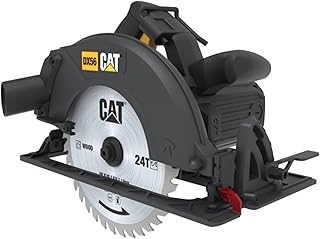


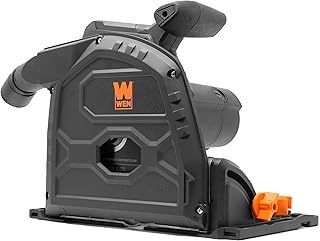

A precision corded plunge saw is designed for controlled, accurate cutting where a conventional circular saw may be less convenient. The defining feature is the plunge mechanism: the blade can be lowered into the workpiece at a controlled point rather than requiring the cut to begin at an exposed edge. This makes the format particularly useful for sheet goods, cabinet components, doors, worktops, flooring materials and other applications where clean, predictable cuts matter.
For Canadian buyers, the most important considerations extend beyond motor power. Blade quality, cutting depth, plunge control, track compatibility, dust extraction, bevel adjustment, electrical compatibility, ergonomics and replacement-parts availability can all affect the long-term value of a saw. A model that looks powerful on paper may not be the best choice if it is difficult to control or poorly suited to the materials and cutting system you use.
A standard circular saw is normally positioned with the base plate against the edge of a workpiece before the blade enters the material. A plunge saw uses a spring-loaded or mechanically controlled cutting assembly that allows the operator to lower the blade into the material from above.
This distinction is especially important when making internal cuts, trimming panels to a marked line, or producing repeatable cuts with a guide rail. The saw can remain supported on a relatively broad base while the blade is lowered progressively, giving the operator greater control over where the cut starts and stops.
The terms plunge saw and track saw are often used interchangeably, but they describe slightly different aspects of the tool. A plunge saw describes the cutting mechanism, while a track saw generally refers to a circular saw designed to work with a guide rail or track.
Many modern precision plunge saws are effectively track-saw systems because they are designed around guide rails. However, compatibility should never be assumed. Rail dimensions, anti-tip features, connector systems and the shape of the saw's guide interface can differ between manufacturers.
Festool, Makita, DEWALT, Bosch and other established power-tool manufacturers have produced plunge or track-oriented systems, but accessories are not universally interchangeable. Before purchasing, confirm that the specific saw and rail combination is intended to work together.
Motor power is an important specification, but it should not be treated as the sole measure of performance. A plunge saw needs to maintain blade speed while cutting through the intended material without excessive bogging, vibration or loss of control.
For Canadian workshop use, consider the materials you actually expect to cut. Thin plywood and melamine panels place different demands on a saw than thick hardwood, laminated worktops or dense sheet materials. A motor specification should therefore be considered alongside blade diameter, maximum cutting depth, blade design and the manufacturer's stated applications.
Cutting depth determines the thickness of material the saw can handle at a particular blade setting. Maximum depth is normally specified with the blade at a standard position, while bevel cutting can reduce usable depth.
Do not compare cutting-depth figures without checking whether they refer to straight cuts, bevel cuts, track use or another configuration. If you frequently work with thicker panels, leave practical clearance rather than selecting a model that only barely reaches the required thickness.
Precise depth adjustment is one of the most useful features on a plunge saw. For panel work, you may want the blade to extend only slightly beyond the material. For other cuts, the full available depth may be appropriate.
Look for an adjustment system that is easy to read, secure once set and convenient to operate without forcing the user to change several controls. Smooth plunge movement is also important because a controlled descent helps reduce sudden blade engagement.
A saw capable of bevel cuts can be considerably more versatile for carpentry, cabinetry and installation work. However, the stated bevel range is only part of the comparison.
Pay attention to how the bevel mechanism locks, whether the angle markings are easy to read, and whether the saw remains stable on the guide rail when tilted. For precision work, repeatability and adjustment control can matter more than having an unusually large maximum angle.
Blade diameter affects both cutting depth and the overall design of the saw. The replacement blade must match the tool's specified diameter, arbor configuration and operating requirements.
Blade tooth count and tooth geometry also affect the finished cut. A fine-tooth blade may be preferable for clean cuts in sheet goods, while a different blade configuration may be more appropriate for faster general-purpose cutting. Always choose a blade specifically intended for the material and saw.
For precision applications, the guide rail may be just as important as the saw itself. A quality rail system helps maintain a straight line while reducing the need to clamp and measure a long cutting guide separately for every cut.
Before purchasing a saw, establish whether rails are included or sold separately and determine which rail lengths suit your work. Longer panels may require a longer rail or a system that allows multiple rails to be connected securely.
Do not assume that a rail from one manufacturer will provide full functionality with another manufacturer's saw. Some systems may physically appear compatible while lacking the intended fit, anti-slip behavior or adjustment features.
A plunge saw is often purchased because the buyer wants more than simply making a straight cut. The objective may be to produce cabinet panels, break down large sheets accurately, trim a countertop or repeatedly cut components to consistent dimensions.
In these applications, accuracy depends on the complete cutting system. The saw, rail, blade, workpiece support and measuring process all contribute to the final result. Even an excellent saw can produce a poor cut if the rail moves, the panel flexes or the blade is inappropriate for the material.
Cutting wood-based sheet materials and other construction products can generate substantial airborne dust. A plunge saw with a well-designed dust port can be connected to a suitable vacuum system to help collect debris at the source.
When comparing models, examine the dust-extraction arrangement rather than simply looking for the words “dust port” in a specification list. Consider the port location, hose compatibility, visibility around the cut and whether the extraction system interferes with movement along the rail.
Dust collection does not eliminate the need for appropriate personal protective equipment or good workshop ventilation. The correct approach depends on the material being cut and the environment in which the saw is used.
This guide focuses on corded precision plunge saws because a continuous mains supply can be attractive for workshop and stationary cutting tasks. Corded tools eliminate battery charging and battery capacity as operating considerations, although they introduce a power cable that must be managed safely.
Cordless plunge saws can be more convenient for mobile work, but their battery platform, runtime, charger requirements and additional battery cost should be considered. A buyer who already owns compatible cordless tools may reasonably value platform compatibility, while a dedicated workshop user may prefer the simplicity of a corded system.
For the Canadian market, verify the electrical requirements of the exact model before ordering, particularly when purchasing through an international marketplace. The tool should be appropriate for the electrical supply and intended use in Canada.
Canadian households and workshops commonly use 120-volt electrical service, so buyers should check the exact electrical specification of any corded saw before purchase. International listings can sometimes display visually similar products with different electrical configurations.
Do not rely solely on a product photograph or a generic marketplace title. Review the manufacturer's specification for the exact model number and verify that the electrical requirements are appropriate for Canadian use.
Check the plug configuration, rated voltage, frequency requirements and model designation. If a listing does not clearly identify the electrical configuration, it is better to investigate the specific model before purchasing than to assume compatibility.
Warranty terms can vary according to manufacturer, seller, region and product category. Imported tools may have different service arrangements from models officially distributed in Canada.
Before buying, check the warranty documentation applicable to the exact Canadian purchase. Also consider whether replacement blades, brushes, guide accessories and other service parts are readily obtainable from legitimate sources.
The saw is only one part of the cutting equation. A worn, damaged or unsuitable blade can compromise cut quality even when the saw itself is functioning correctly.
For laminated panels, plywood, MDF and other sheet goods, blade selection should take the surface material and desired finish into account. For solid wood, tooth geometry and cutting direction become particularly relevant.
Clean cuts in plywood, veneered panels and laminated sheet goods can be affected by the direction in which the blade teeth exit the material. Guide systems may incorporate an edge strip or splinter-control feature that helps support the material at the cut line.
These features are useful, but they are not magic solutions. Blade condition, tooth geometry, feed rate, material construction and the direction of the cut all influence the final edge.
If a guide rail includes a replaceable splinter strip, follow the manufacturer's procedure for positioning and trimming it. A properly fitted strip can also help establish the relationship between the rail edge and the actual blade path.
A precision tool should be comfortable enough to control throughout the complete cut. Look for handle positioning that allows a stable grip, controls that are easy to reach and a plunge action that does not require excessive force.
Weight distribution is also worth considering. A heavier saw may feel stable in some situations but can become tiring during repeated overhead or awkward-position work. A lighter design can be easier to maneuver, but stability and construction quality should not be sacrificed simply to reduce weight.
Where possible, compare the physical dimensions and handle arrangement of shortlisted models rather than relying exclusively on motor specifications.
Plunge saws combine a high-speed rotating blade with a mechanism that allows the blade to enter the workpiece from above. Safety should therefore be part of the buying decision, not an afterthought.
A plunge saw can be highly useful for breaking down plywood accurately. A suitable fine-cutting blade and stable guide rail can help produce cleaner edges, especially when the finished panel will form part of a cabinet or built-in installation.
Dense engineered panels can generate significant dust and may place greater demands on the extraction system. Use an appropriate blade and ensure the workpiece is properly supported.
Surface chipping can be a major concern when cutting laminated panels. Blade selection, rail support and feed control become particularly important. Test settings on scrap material when the finished appearance matters.
Some plunge saws can handle solid wood, but buyers should verify the manufacturer's intended applications and the blade specifications. Material thickness, grain direction and the length of the cut can all affect the practical workload.
Long, straight cuts are one reason professionals and serious DIY users consider track-based plunge saw systems. When cutting a countertop or worktop, however, the material's construction and the blade manufacturer's recommendations should be checked carefully before starting.
Brand reputation can be useful when comparing power tools, but it should not replace model-specific research. Different manufacturers may emphasize different aspects of a plunge-saw system, and even within the same brand, specifications can vary substantially between models.
When comparing these brands in Canada, use the exact model number rather than the brand name alone. Product generations, included accessories, electrical configurations and regional packages can differ.
A useful comparison should go beyond star ratings and headline motor specifications. The following criteria provide a more meaningful framework for evaluating the products in a Top 10 list.
The purchase price of the bare tool can be misleading. A saw that requires a separate guide rail, specialized clamps, additional blades and other accessories may ultimately cost more than a package that includes the equipment required for the intended application.
Conversely, paying for a premium accessory ecosystem makes little sense if the saw will only be used occasionally for basic DIY projects. The better approach is to calculate the complete setup required for the work you expect to perform.
A high power figure does not automatically mean a saw will produce more accurate cuts. For precision applications, guide compatibility, plunge control, blade quality and stability can be equally important.
Buyers sometimes focus on the saw and discover later that the preferred guide rail is not included or is incompatible with their intended setup. Confirm the complete rail ecosystem before purchasing.
International marketplaces can contain products intended for different electrical systems. Always verify the exact model's electrical specifications before ordering in Canada.
A premium saw fitted with an unsuitable blade can still produce disappointing results. Match the blade to the material and the desired finish.
A guide rail, additional blade or extraction adapter may be essential to the way you intend to use the saw. Include those items when comparing overall value.
A professional-grade system can be worthwhile for frequent cabinetmaking, installation or workshop use. For occasional home projects, however, the additional cost and complexity may not provide proportional benefits.
The guide rail should be positioned on a stable, clean surface. Dust, debris or a contaminated underside can reduce grip and affect positioning. Large sheets should be supported adequately so that the cut does not pinch the blade as the material shifts.
When making a critical cut, consider performing a trial cut on scrap material. This can confirm the rail position, blade behavior and edge quality before cutting an expensive panel.
For repeated production-style work, a consistent measuring and marking process is often more valuable than repeatedly relying on visual alignment.
Regular maintenance helps preserve cutting accuracy and safe operation. The exact maintenance schedule should follow the manufacturer's instructions, but routine care commonly includes keeping the tool and guide system free from accumulated dust and checking the condition of moving components.
There is no universal replacement interval because blade life depends on material, cutting frequency, feed pressure, blade construction and working conditions. Instead of relying on a fixed number of cuts, monitor the tool's behavior.
Signs that a blade may require attention include poorer cut quality, increased resistance, unusual vibration, burning or other changes from normal operation. A damaged blade should not be used simply because it still appears capable of cutting.
Cabinetmaking typically places a high value on repeatability, clean sheet-good cuts and compatibility with a reliable guide system. Buyers should therefore prioritize the complete cutting workflow rather than choosing solely on maximum power.
DIY users may not need the most expensive professional system. The best choice is usually the model that offers enough cutting capacity and accuracy for the projects planned while remaining straightforward to set up.
If the intended projects include shelving, doors, flooring, plywood panels or occasional furniture construction, compare the saw's cutting depth, guide-rail options and included accessories. A complete and easy-to-use system can be more useful than a technically advanced tool that requires numerous additional purchases.
Professional users should place greater emphasis on durability, repeatability, ergonomics and the availability of consumables and replacement accessories. Downtime can be more consequential when the tool is part of a daily workflow.
Consider how frequently the saw will be transported, whether long guide rails are needed, how often blades will be changed and whether dust extraction will be used throughout the working day. The most appropriate model is the one that fits the complete workflow rather than simply having the highest specification.
If accuracy is the primary objective, prioritize features in roughly this order: a dependable guide system, predictable plunge control, suitable blade quality, accurate depth adjustment, stable bevel adjustment, good workpiece support and effective dust management.
Motor performance remains important, especially for thicker materials, but precision work is rarely improved by power alone. The best results come from matching the saw, blade, guide rail and cutting technique to the application.
Customer ratings can provide useful signals, but they should be evaluated alongside specifications and the reviewer's use case. A person using a plunge saw occasionally for home projects may judge the tool differently from a cabinetmaker who uses it continuously.
When reading reviews, look for recurring comments about rail compatibility, cutting accuracy, plunge smoothness, dust collection, blade changes, ergonomics and long-term reliability. Give more weight to detailed reviews that explain the application than to very short comments that only discuss the delivery experience or initial impression.
Also distinguish between reviews of the exact model and reviews of another product in the same product family. Model names can be similar while specifications and accessories differ.
Manufacturers do not always present specifications in exactly the same format. One product may emphasize motor input, another may highlight cutting depth, and another may focus on guide-system capabilities.
For a fair comparison, create a consistent checklist containing voltage, power, blade diameter, cutting depth, bevel range, weight, rail compatibility, dust extraction and included accessories. Then compare like with like.
Do not treat a missing specification as proof that a product lacks the feature. Instead, look for the manufacturer's technical documentation or the exact retailer listing for the model under consideration.
A premium model can make sense when the saw is used frequently and accuracy, durability, ergonomics and system integration have a direct effect on productivity. For occasional users, the additional investment may be harder to justify.
The correct question is not simply whether an expensive saw is better. Ask whether its additional capabilities solve a problem you actually have. If better guide-rail integration, adjustment precision or dust extraction will improve your regular work, those features may justify a higher budget. If the saw will only be used a few times each year, a simpler system may be sufficient.
There is no single best model for every Canadian buyer. The right choice depends on the required cutting depth, materials, guide-rail system, frequency of use, budget, dust-extraction setup and electrical configuration. Compare the exact specifications of the shortlisted models before purchasing.
Yes. Corded plunge saws can be particularly useful for woodworking applications that involve large panels, long straight cuts and repeatable guided cutting. Their suitability depends on the specific saw, blade and guide system.
In some applications, yes, but they are not identical tools. A conventional circular saw can be more convenient for general construction cutting, while a plunge or track saw is particularly useful when controlled entry and guided precision are priorities.
Many plunge saws are suitable for plywood when fitted with an appropriate blade and used according to the manufacturer's specifications. Blade selection and workpiece support are especially important when the finished edge must be clean.
Not every plunge saw requires a guide rail for every cut, but a compatible track can significantly improve straight-line accuracy and repeatability. Check the manufacturer's instructions and compatibility information for the exact model.
Compatibility varies. Some guide systems may share similar physical dimensions, but that does not guarantee that every saw will interface correctly or retain all intended features. Confirm compatibility for the specific saw and rail models.
If guided cutting is central to your intended use, a package that includes a suitable rail can be convenient. Compare the included rail length and accessories rather than assuming every bundle contains the same equipment.
Use a blade that matches the saw's specifications and is designed for the material being cut. Fine-tooth configurations may be useful when clean sheet-good edges are important, while other tooth designs may be better suited to different materials or cutting objectives.
Set the depth according to the material and the manufacturer's instructions. For some panel cuts, only a limited amount of blade exposure beyond the workpiece is necessary. Avoid choosing the maximum setting automatically when a shallower setting is appropriate.
Dust extraction is highly useful when cutting dusty materials, particularly in enclosed workshops. It can help control airborne debris and improve visibility around the cut, but it does not replace appropriate respiratory protection, ventilation and safe working practices.
Bevel capability matters if you regularly make angled cuts. If nearly all of your work consists of straight panel breakdown, a highly sophisticated bevel system may be less important than rail accuracy and plunge control.
Check the exact model number, electrical specification, included accessories, blade configuration, guide-rail compatibility, warranty terms and seller information. Product listings can change, so verify the details for the specific listing being considered before placing an order.
The strongest precision corded plunge saw choice is the one that matches the complete cutting workflow rather than the one with the most impressive headline specification. Start with the materials and cut types you perform most often, then compare cutting depth, blade requirements, guide-rail compatibility, plunge control, bevel adjustment, dust extraction and ergonomics.
For Canadian buyers, also verify the exact electrical configuration and applicable warranty or service arrangements. When comparing products from brands such as Festool, Makita, DEWALT, Bosch, Mafell and Triton, evaluate the individual model rather than assuming every tool in a brand's range provides the same capabilities.
Finally, consider the complete system cost. A precision plunge saw is most effective when the saw, blade, guide rail, workpiece support and dust-management setup work together. Comparing those components before purchasing can help you avoid compatibility problems and choose a tool that remains useful well beyond the first project.