

♥ Wishlist
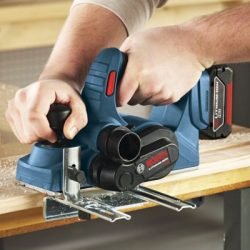
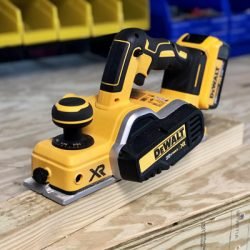
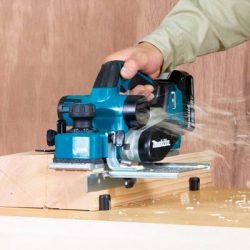
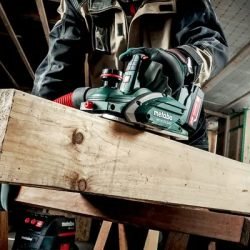
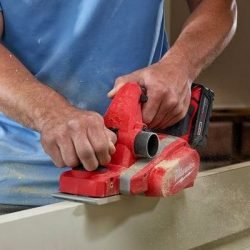


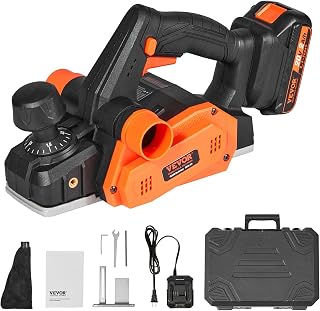
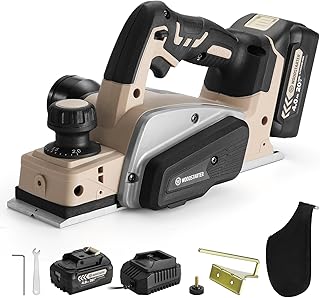


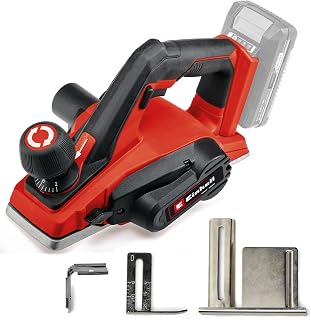


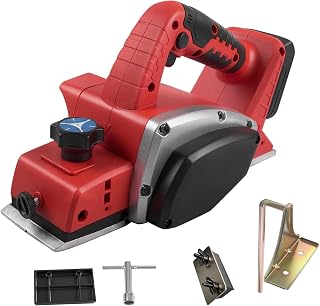


A cordless planer is a battery-powered woodworking tool designed to remove a controlled amount of material from a wood surface. Unlike a corded hand planer, it does not require a nearby electrical outlet, making it useful for renovation projects, workshops, construction sites and outdoor work. For Canadian tradespeople and DIY users, cordless operation can make it easier to move around a jobsite, work on unfinished structures and handle boards wherever they are located.
Modern cordless planers are available in several battery voltages, cutting capacities and configurations. Many handheld models use a planing width around 3-1/4 inches, making them suitable for common boards, door edges and general woodworking tasks. When comparing models, look at the maximum cutting depth as well as the adjustment range. A planer with fine depth control can help you remove small amounts of material for accurate fitting and finishing, while a greater maximum depth can be useful when more material needs to be removed.
Cutting width determines how much material the planer can remove across each pass. A wider cutting capacity can reduce the number of passes needed on suitable boards. Depth adjustment is equally important because it lets you control how aggressively the tool cuts. For precision work, calibrated adjustment is especially useful when fitting doors, levelling edges or preparing timber for assembly.
Battery compatibility should be one of the first considerations when choosing a cordless planer. If you already own compatible cordless tools, selecting a planer from the same battery platform can reduce the need to purchase additional batteries and chargers. Runtime depends on the battery capacity, material, cutting depth and workload, so users completing longer jobs may benefit from having an additional charged battery available.
Brushless cordless planers are designed to deliver efficient motor performance with fewer mechanical wear components than traditional brushed motors. Depending on the model, a brushless motor may provide useful efficiency and consistent operation under load. Compare motor technology alongside the actual cutting specifications rather than choosing based on motor type alone.
A battery-powered hand planer can be useful for a wide range of woodworking applications. Common tasks include trimming doors that bind, smoothing rough timber, reducing the thickness of board edges, preparing reclaimed wood, chamfering corners and making controlled adjustments during furniture construction. The cordless format is particularly convenient when working where extension cords would be inconvenient or when electrical access is limited.
For heavier production work involving large quantities of timber, a stationary thickness planer may be more appropriate. A cordless hand planer is generally better suited to portable material removal and on-site adjustments. Understanding the difference between these tools can help you select equipment that matches the job rather than simply choosing the most powerful option.
Start by considering the type of woodworking you normally perform. For occasional DIY projects, a compact model with straightforward depth adjustment may provide everything you need. Professional users may want to prioritise motor performance, battery runtime, ergonomics, blade availability and compatibility with an existing battery system.
Also consider the planer’s weight and balance. A lightweight tool can be easier to control during repeated passes, while a solid base and comfortable handle can help maintain a consistent position against the workpiece. Features such as a kickstand, chamfering groove, parallel guide, dual chip exhaust and dust collection compatibility may also improve convenience depending on the application.
When shopping for a cordless planer, compare the specifications that directly affect your work: planing width, maximum cutting depth, battery voltage, motor type, weight and included accessories. Some products are sold as bare tools, while others include a battery and charger, so check the package contents before comparing prices. Battery and charger availability can be particularly important when building or expanding a cordless tool collection.
Whether you need to make quick adjustments during a renovation, prepare timber for a woodworking project or smooth and shape wooden components, the right cordless planer can provide portable cutting performance without the restriction of a power cable. Explore the available options and choose a model with the capacity, battery system and features that fit your Canadian workshop or jobsite.
Find the right cordless planer for woodworking, renovation and jobsite projects in Canada. Battery-powered hand planers provide the freedom to work without a power cord while offering adjustable cutting depth, compact handling and the control needed for smoothing boards, fitting doors and refining wood edges. Whether you are a professional tradesperson, furniture maker or DIY enthusiast, compare cordless planers by cutting capacity, battery platform, motor performance and useful features to choose a model that matches your work.