
♥ Wishlist


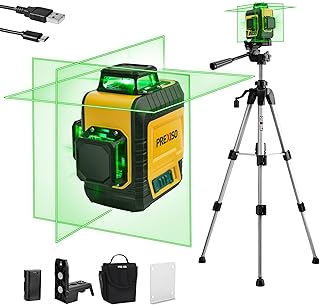


A DeWalt line laser level is designed to provide clear laser reference lines for levelling and alignment tasks. Instead of repeatedly checking a traditional spirit level, users can project a horizontal, vertical or intersecting line across a work area. This can make layout work easier, particularly when accuracy needs to be maintained over longer distances or across multiple surfaces. DeWalt laser levels are commonly considered for construction, renovation, installation, carpentry and general property improvement projects.
When choosing a line laser level in Canada, start by considering the type of work you regularly perform. A simple horizontal or vertical line may be suitable for straightforward installation tasks. A cross-line model can project both horizontal and vertical references, making it useful when working with cabinets, shelving, doors, windows, wall features and other installations that require alignment in more than one direction. The right configuration depends on the project rather than simply the number of laser lines.
Working range is an important consideration when comparing laser levels. A compact model may be convenient for smaller indoor jobs, while projects involving larger rooms, extended walls or wider layouts may benefit from a longer operating range. If the laser will be used across a busy worksite, also consider how easily the projected line can be seen under the available lighting conditions.
Accuracy is another key factor. A laser level should provide a dependable reference so measurements and installations can be completed with confidence. Look at the stated accuracy specifications and operating range for each model before making a purchasing decision. For professional users, these specifications can be especially important because repeated layout work can depend on consistent results.
Self-levelling functionality can save time during setup. Instead of manually adjusting the tool until the reference is level, a self-levelling laser can compensate within its specified operating range. This can be useful when moving between different work areas during a project. Some models also provide manual mode functionality for applications where the user needs to project a line at a particular angle.
Mounting and positioning options are also worth checking. A suitable mounting system can make it easier to place the laser at the required height or location. Depending on the model, users may look for compatible brackets, magnetic mounting options, tripods or other positioning accessories. A secure setup helps maintain the reference line while work is being completed.
Battery requirements can influence both convenience and running costs. If you already use compatible DeWalt cordless tools, a laser level that works with a familiar battery platform may fit more easily into your existing setup. For occasional users, compact battery-powered options can offer convenient portability. Always check the specific model specifications to confirm battery type, included accessories and charging requirements.
For Canadian jobsites, the environment should also be considered. Construction and renovation work can involve dust, movement and changing conditions. Look at the manufacturer's stated durability and protection specifications when selecting a model for demanding applications. A tool intended for professional site use may be preferable when it will be transported frequently or used throughout active construction projects.
Line laser levels can be useful for a wide range of layout tasks. Home renovators may use them when positioning wall cabinets, shelves, tiles or fixtures. Contractors can use projected lines to establish reference points during interior construction and installation work. Carpenters, electricians, plumbers and other trades may also use laser references when components need to be aligned consistently.
For interior projects, visibility and setup speed can be particularly valuable. A clearly projected line can provide a continuous reference across a wall instead of requiring several separate measurements. This can help reduce repeated checks and make it easier to maintain a consistent installation height. However, users should always follow the tool's instructions and verify critical measurements with appropriate methods.
Before selecting a model, compare the laser layout, range, accuracy, self-levelling capability, mounting system, battery arrangement and included accessories. Think about where the tool will be used most often. A compact cross-line laser may be a practical choice for indoor renovation and installation work, while a more feature-rich model may better suit professionals who need additional flexibility on larger projects.
Buying from a Canadian-focused shopping environment also makes it useful to consider availability, delivery, pricing in Canadian dollars and compatibility with your existing equipment. Product specifications can vary between models and regional listings, so check the individual product information carefully before ordering.
Whether you are completing a home improvement project or working on a professional jobsite, a dependable line laser can make levelling and alignment tasks more straightforward. Explore the available DeWalt line laser levels and compare the specifications that matter most for your projects. Selecting a model based on its intended application, visibility, accuracy and setup requirements can help you choose a laser level that fits your workflow.
Find a DeWalt line laser level for precise levelling, alignment and layout work. These laser tools project clear reference lines that can help simplify tasks such as installing cabinets, setting wall layouts, aligning fixtures and completing renovation projects. For Canadian shoppers, choosing the right laser level means considering working range, visibility, accuracy, battery system, mounting options and the conditions in which the tool will be used.
Primary: Commercial investigation and transactional
Secondary: Informational and product comparison