

♥ Wishlist







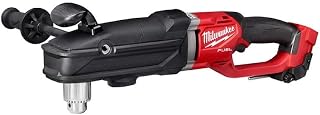


Milwaukee angle drills are built for drilling and fastening applications where access is limited. Instead of using the straight body design found on a conventional drill, an angle drill places the chuck and working end at a right angle to the motor. This configuration can make a major difference when working inside narrow spaces, between framing members or around obstacles.
For Canadian shoppers, choosing the right Milwaukee angle drill starts with understanding the type of work you expect to perform. Compact models can be practical for cabinetry, plumbing, electrical installation, remodelling and general maintenance. Larger right-angle drills may be better suited to demanding construction applications where higher power and durability are priorities. Consider the materials you regularly drill, the size of the holes required and how much clearance you have around the work area.
A Milwaukee right angle drill can be particularly useful when a standard drill cannot be positioned directly over the fastening point. The reduced profile helps users reach areas that are difficult to access with a conventional tool. This makes the category relevant to professional contractors as well as homeowners completing renovation projects.
When comparing models, look at chuck size, speed range, torque, overall dimensions and power system. A variable-speed model can provide greater control across different drilling and fastening tasks. Chuck capacity also matters because it determines the range of compatible drill bits and accessories. If you already own compatible Milwaukee batteries, a cordless model may also provide a convenient addition to your existing tool collection.
Cordless angle drills are useful when mobility is important. Without a power cord restricting movement, users can work inside cabinets, on ladders, around framing and in unfinished spaces with fewer obstacles. Battery-powered models can also be convenient for service calls and renovation projects where access to mains power is limited.
Before choosing a cordless angle drill, check battery compatibility and whether the tool is sold as a bare tool or as part of a kit. A bare tool can make sense when you already have compatible batteries and a charger. A complete kit may be more suitable when you are building a cordless tool setup from scratch. Battery capacity can also affect working time, tool weight and overall handling.
The main advantage of an angle drill is accessibility. A traditional drill can become difficult to use when a wall, joist, cabinet panel or other obstruction prevents the user from aligning the tool with the drilling point. A right-angle design changes the position of the motor and handle, allowing the chuck to reach locations that may otherwise be inaccessible.
This makes Milwaukee angle drills suitable for many applications, including electrical work, plumbing, woodworking, cabinet installation, framing and maintenance. The best model depends on the space available and the demands of the job. For repetitive professional work, ergonomics, balance and control are especially important because the tool may be used for extended periods.
Check the chuck specification before buying. A suitable chuck size ensures compatibility with the drill bits and accessories you intend to use.
Different materials and applications require different operating characteristics. Compare speed ranges and torque ratings to find a model that matches your typical workload.
For cordless models, confirm the battery platform. Staying within a compatible system can reduce the need to purchase additional batteries and chargers.
Compact dimensions can be valuable in confined spaces, while balanced handling can make repetitive drilling more comfortable. Consider the tool's overall size and grip when comparing options.
Whether you are installing cabinets, running electrical work, drilling through framing or handling renovation tasks, the right angle drill can improve access and control. Compare Milwaukee angle drills according to power, size, speed, chuck capacity and battery compatibility before choosing a model. Canadian shoppers should also consider the requirements of their specific project and select a tool that matches the materials and working environment.
Use this category to explore Milwaukee angle drill options and compare models based on the features that matter most to your work. A well-matched right-angle drill can be a useful addition to a professional workshop, construction toolkit or home renovation setup.
Milwaukee angle drills are designed for drilling and fastening where a conventional drill may be difficult to position. Their compact right-angle configuration makes them useful for work inside cabinets, between studs, beneath sinks, around framing and in other confined areas. For Canadian tradespeople, renovators and serious DIY users, an angle drill can provide better access without requiring an awkward wrist position. Explore the Milwaukee angle drill range to find a model suited to your workspace, material and project requirements.